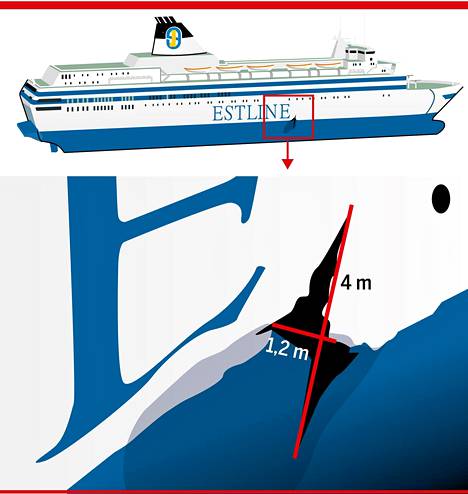
damfin kirjoitti: La Syys 28, 2024 11:49 am
Kåppis kirjoitti: La Syys 28, 2024 10:56 am
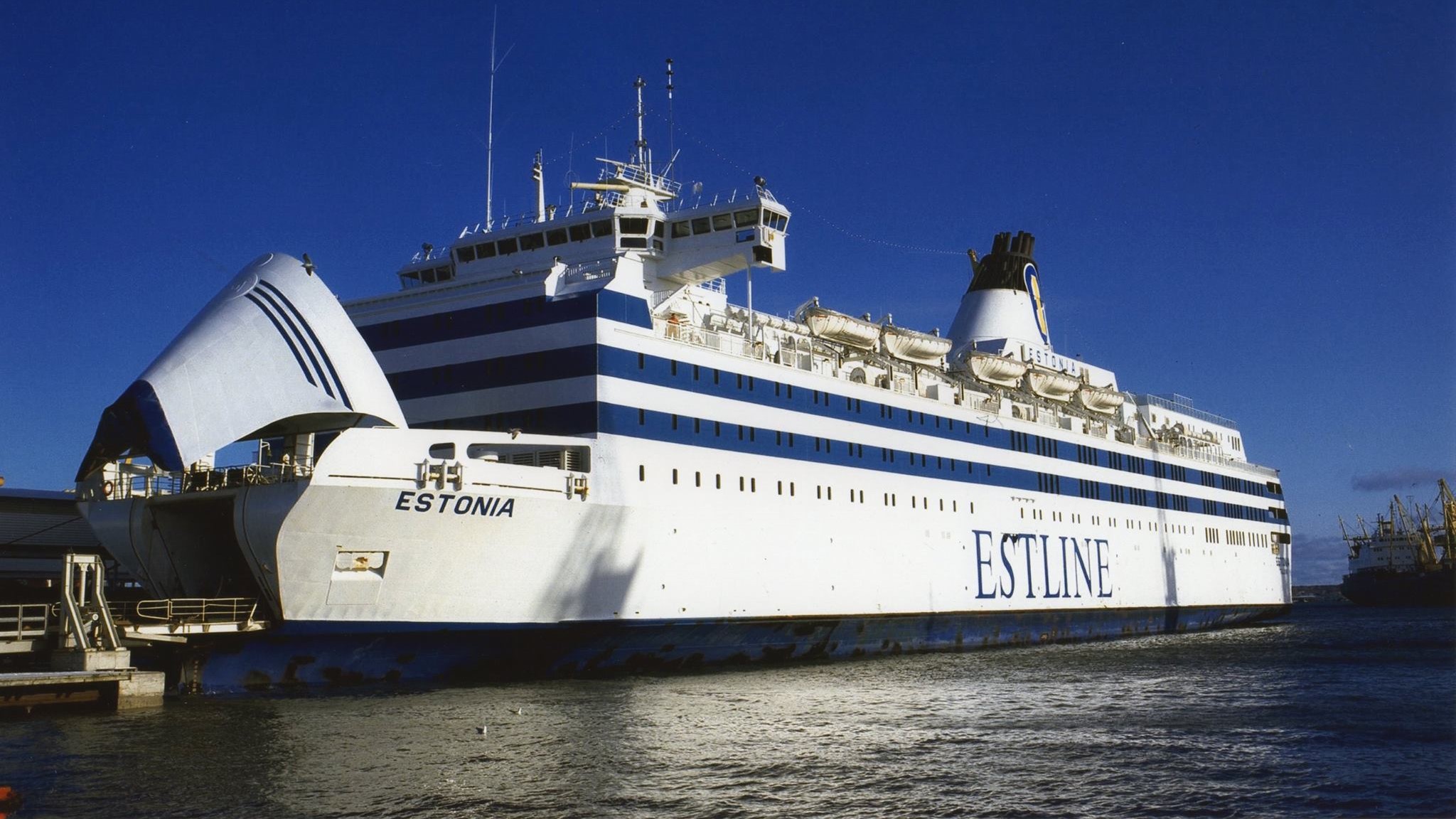
Voisi tuostakin hiukan miettiä, että miten toi edes aukeaa mihinkään. Mieti painopistettä ja saranointia. Laiva ei missään vaiheessa ole kulkenut sellasessa kulmassa että vailla lukituksia oleva luukku aukeaisi. Vasta-aaltokin painaa sitä vain kiinni. Sitten siellä on se keularamppi joka estää isojen vesimäärien tulon. Toi keulavisiiri ei ole siellä heilunut ja hakannut millään tavalla vaikka olisi ollut lukitukset auki. Ihan on koko teoria väkisin ajettu "totuudeksi" kuin käärme pyssyyn.
https://estonianworld.com/wp-content/up ... line-1.jpg
Siis häh, että miten se aukeaisi? no keulavisiiri aukeaisi ihan siinä merenkäynnissä lukitusten pettäessä kun aallot hakkaavat sitä vasten, muotohan on sellainen että edestäpäin lyövät aallot työntävät visiiriä ylöspäin.
Visiirin saranat on sen yläreunassa, eli aalto nostaa visiiriä ylöspäin, ja aaltojen välissä visiirin paino pudottaa sen alaspäin eli lukitusten pettäessä se aallokossa todellakin heiluu ylös ja alas
Rampin yläpää taas meni keulavisiirissä olevaan lokeroon, joka aiheuttaa sen että visiirin tippuessa sen paino repii rampin auki, rampin sylintereitä ei ole suunniteltu kestämään keulavisiirin paino vaan pelkän rampin paino.
Sinun kannattaisi nyt ihan oikeasti perehtyä sen keulan rakenteeseen ja muotoon niin kykenisit ehkä ymmärtämään millaisia ja minkä suuntaisia voimia siihen aallokkoa vasten ajettaessa kohdistuu.
Tämän Independent Fact Groupin mukaan visiiri ei voi pomppia mihinkään, koska sitä kontrolloi 2 hydraulista nostajaa, jotka pitävät visiirin paikallaan asennosta riippumatta. "Niitä voi verrata kiinteisiin metallitankoihin", eli kun öljyä on systeemissä, rakenne ei jousta.
Näitä irtirepeytyneitä öljyletkuja ei visiiristä löytynyt kun se nostettiin. Tutkimuksen mukaan (kuvia on tuolla paljon), öljyletkut ja teräsputki oli irrotettu uppoamisen jälkeen. Pitävät tätä 100% varmana faktana ja ovat testanneet, missä paineessa putket repeytyvät, ja miten katkenneet putket tietysti jäävät pumppuihin kiinni. Näistä hydraulipumpuista ei löytynyt vaurioita myöskään ja öljyputkia hävisi kaksi kokonaan.
Tämä on vuodelta 2020, ja varmaan täällä käsitelty ja ehkä joku virallinen selityskin on?
https://www.factgroup.uk/onewebmedia/Final%20Visor.pdf
The visor was operated (lifted and closed) by two large hydraulic actuators. The oil hoses and steel pipes were missing when the visor was
salvaged.
The two actuators marked CD9-38725-6 250 were massive and each actuator had a maximum
lifting/closing power at a design pressure of 250 bar of 153 ton. It is important to understand
that a hydraulic actuator with an intact oil flow system is 100% stable,
its piston rod cannot
flex. This is due to the fact that
oil can not be compressed. In any chosen position the actuator
with its piston is to be seen as a fixed steel rod. With an intact oil system, the visor could not have been bouncing up and down hitting the forepeak deck until it “fell off” according to the JAIC final report.
Kun visiiri nostettiin:
Both the steel pipe and flexible hydraulic hoses were missing. The bracket and clam for the
steel pipe and the 90 degree attachment pipe made in steel were found intact. It is not possible
that the hoses and pipe disconnected from the actuator and fell off by themselves. The hoses
should have been in place when the visor “fell off” and the remains of the flexible hoses had
been found still attached to the actuators. The steel pipe should also have been in place and
found attached to the actuators. This was not the case. This is incontrovertible
Summary
In this report the Independent Fact Group prove that substantial actions took place on the
visor of MV Estonia BEFORE the visor was detached from the ship. It is impossible that
those actions were performed before the sinking of MV Estonia, they were definitely done
before the visor was salvaged to the surface.
It is therefore an incontrovertible fact that the visor of MV Estonia was removed with the
support from divers at the seabed of the wreck after the disaster. Those actions must have
been performed within the first four days after the catastrophe. The only possible perpetrators
are organizations under the Swedish and Finnish authorities.
Specific findings on the visor that were visible directly after it was salvaged to the surface
prove that divers manually had prepared the detachment of the visor from its normal position
in front of the forward bulkhead.
All hydraulic pipes, both the flexible rubber hoses and the permanently mounted steel pipes
on the hydraulic actuators have been dismantled to enable the visor to be removed from the
vessel.
The findings also prove that the fundamental ground for the conclusions made by JAIC based
on “the loss of the visor” as the cause of the sinking is FALSE. It was fabricated to fit the
only official scenario and its causal relationship during the disaster.
In contrary MV Estonia was lost at sea with the visor intact and in place.